About
Buhurt Arena
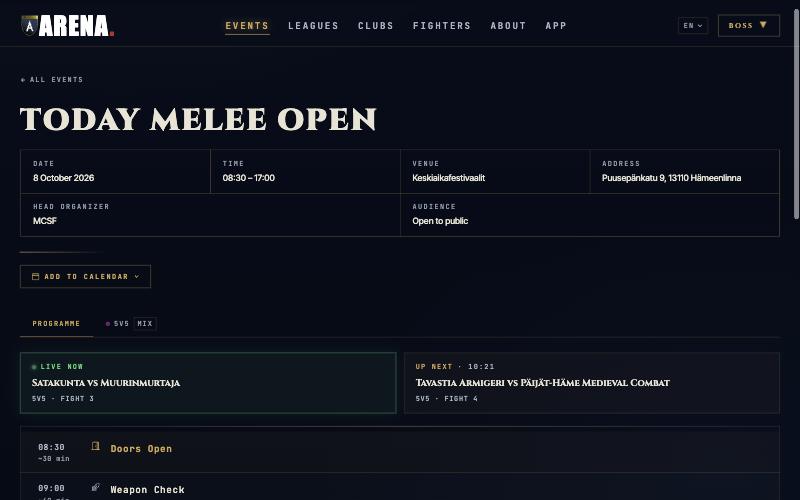
Tournament management software built for the Buhurt and Historical Medieval Battle community. Run events, track scores, and publish results — all in one place.
Live Scoring
Scores are entered in real time by event staff and published instantly to the web. Spectators and remote followers see match results as they happen.
Event Scheduling
Organizers build a full event programme — match queue, block entries like Weapon Check or Captains Meeting — with automatic time calculations and pinned checkpoints.
Bracket Tracking
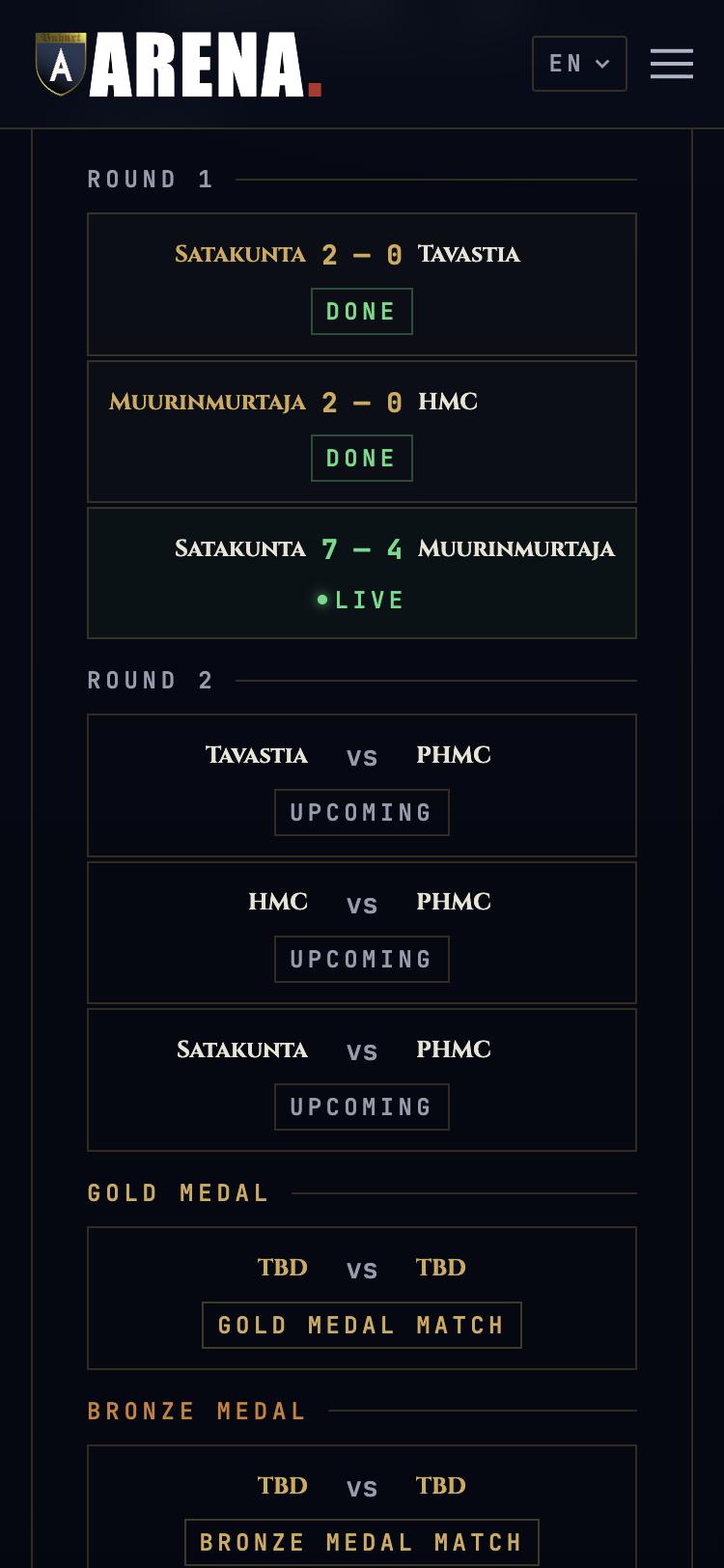
Supports round-robin, single elimination, and double elimination formats. Brackets update automatically as match results are submitted.
League Standings
Season-long leagues with cumulative standings. Points, wins, and losses are tracked across all events belonging to a league.
Multi-Category Events
A single event can host multiple tournaments — 5v5, 3v3, individual duels — each with its own bracket, teams, and standings, all shown under one event page.
Fighter & Club Profiles
Fighters and clubs are registered in the system. Teams are built from registered fighters so stats and history carry across events automatically.
How It Works
From Setup to Final Whistle
01
Create an Event
Organizers set up an event with date, venue, and start time. Tournaments are added for each combat category.
02
Register Teams
Fighters and clubs are registered in the system. Teams are assembled and seeded into the bracket.
03
Build the Programme
The match queue is ordered and non-match blocks are added. The system calculates expected times for every item automatically.
04
Run the Event
Staff enter round-by-round scores on any device. Results publish instantly to the public event page.
05
Standings Update
When the event concludes, league standings are updated. The full bracket and results remain archived on the site.
Built For
The Buhurt Community
Buhurt Arena is purpose-built for Buhurt events. Unlike generic sports software, it understands the structure of Buhurt — team fights, individual duels, multiple rounds per match, and the complex scheduling that comes with running several categories in parallel. It handles the administrative overhead so organizers can focus on running a great event.